About Us
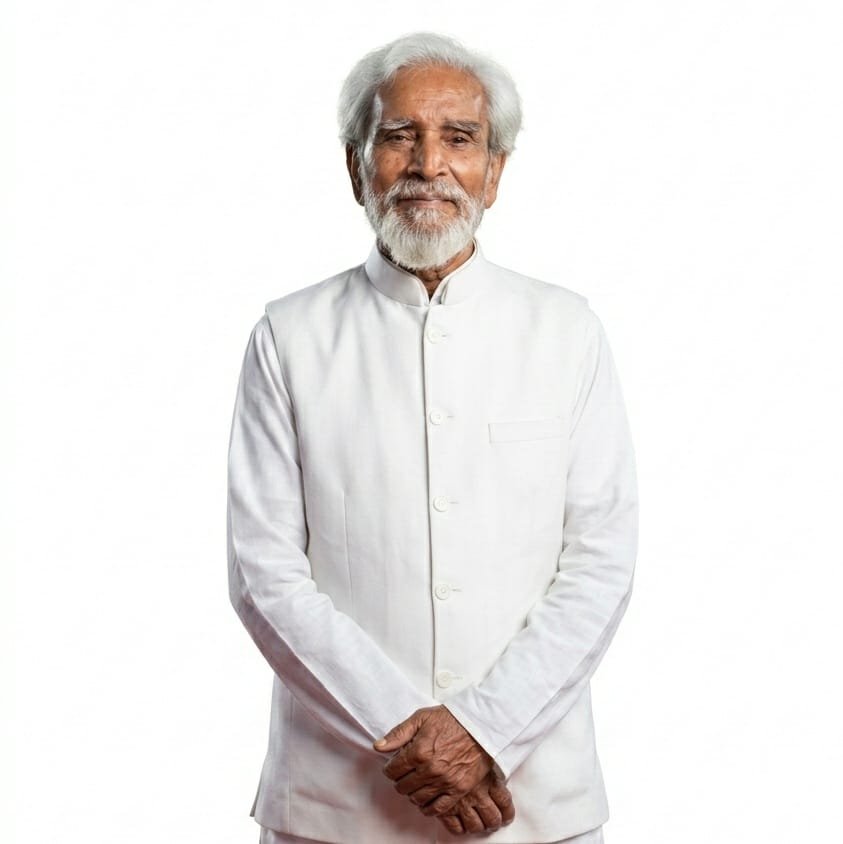
I, Brahmanand Singh,
The Rise of the Bharatiya Rashtriya Morcha (INF) Party
I, Brahmanand Singh, have had a long and bitter experience of social and political life, beginning from my student days in Class 10 in 1962 through my years as a teacher until 1979–80. During this period, I observed that in political parties, both before and after India’s independence, no matter how dedicated, sincere, hardworking, or committed a grassroots worker might be, his position remained largely limited to laying carpets and platforms, putting up flags, banners and posters, raising slogans, and praising the leaders—unless he possessed a mansion, motor vehicle, bungalow, other luxury amenities, or substantial wealth and property.
In 1967, I left my government teaching job and joined a private school as a teacher. During this period, under the inspiration and guidance of my maternal uncle, Shri Krishnalal Singh, I joined the Communist Party of India (CPI). Considering my education and abilities, the party appointed me as the General Secretary of Etawah District.
However, during the Bakewar police firing incident, many people were killed. Among those who survived were my maternal uncle and me. After this incident, I observed a clear difference between the words and actions of financially well-off office-bearers during party meetings. Deeply disappointed by this, I left the party.
In 1969, while I was serving as a Vice Principal at a college, I joined the Rashtriya Swayamsevak Sangh (RSS) and became the Mandal President of Dharwar Mandal. However, during an RSS programme at PPN Inter College, Kanpur, I became deeply disturbed by a communal speech delivered by Gol Balkar. Later, at the conclusion of a three-day programme at Hindu Vidyalaya, Jaswant Nagar, I had a disagreement with Thakur Ram Govind Singh, the then Provincial Sanghchalak, over what I considered discriminatory treatment between rural and urban volunteers. As a result, I separated myself from the RSS.
Meanwhile, after my relations with the college manager deteriorated, I moved to Hismapur village in Farrukhabad district, a predominantly backward and Dalit rural area. With the permission and support of Nawab Shri Nawab Ali Safavi, I established a school there from Class 1 to Class 8 and obtained official recognition from the education department. At that time, in this village and the surrounding villages, there were only two educated persons—one who had passed Class 7 and another who had passed Class 4.
This was the beginning of the second phase of my political journey.
During this period, I remained in contact with prominent political leaders including Hemwati Nandan Bahuguna, Devraj Urs, Jagjivan Ram, and Ashok Mehta. I also maintained good relations with Ram Naresh Yadav and Satya Pal Singh Yadav.
Earlier, when Mulayam Singh Yadav was serving as the Minister of Cooperation, I had a disagreement with him concerning senior IAS officer Prem Chand. However, Satya Dev Tripathi, the then Minister for Mountain Development from Etawah, supported me in that matter.
At the end of 1979, Mayawati visited my residence and requested me to join DS4 (Dalit Shoshit Samaj Sangharsh Samiti). However, my wife advised against joining it. By that time, the idea of establishing an independent organisation had already begun taking shape in my mind.
My thinking was that there should be a political organisation in which the dignity and respect of a worker and a leader are equal. No one should consider himself superior or inferior to another. There should be no discrimination among members in sitting, standing, resting, conversing, eating, or having refreshments.
Only during meetings, on platforms, and at official political programmes should seating and other arrangements be determined according to the dignity and responsibility of the position. Beyond such formal occasions, there should be no discrimination.
With this philosophy, after discussing the idea with my colleagues, on 1 January 1980, I established the Kranti Rashtra Seva Dal for social service activities. We began public service and social work under its banner.
For approximately one year, we worked to resolve public grievances and problems by taking them up with the government and administration. Because the organisation consistently worked honestly in the public interest, it developed a clean and positive reputation among the administrative authorities.
Later, on 23 January 1981, on the auspicious occasion of the birth anniversary of Netaji Subhas Chandra Bose, a meeting was held in Farrukhabad. During this meeting, the word “Kranti” (Revolutionary) was removed from the organisation's name, and it was renamed Rashtra Seva Dal.
At the same time, separate names were decided for the different areas of work:
Rashtra Seva Dal – for social service activities
Bharatiya Rashtriya Morcha (INF) – for political activities
Krishnayani – as the security organisation
On the auspicious occasion of Buddha Purnima, the three organisations were formally re-established under the names Rashtra Seva Dal, Krishnayani, and Bharatiya Rashtriya Morcha (INF).
Preparations were also undertaken to register the Bharatiya Rashtriya Morcha (INF) as a political party with the Election Commission of India.
Subsequently, in 1982, on the occasion of Ashok Vijayadashami, the organisation was restructured. During this restructuring, work began on preparing the party constitution in accordance with the registration rules of the Election Commission. The designs of the logos of all three organisations, as well as the design of the party flag, were also initiated.
By 30 April 1990, the complete documentation and application papers required for registration had been prepared. The registration documents were subsequently sent by registered post to the Election Commission of India, New Delhi, on 19 January 1991.
In the course of the registration process, various objections raised by the Election Commission were addressed and resolved. Thereafter, a hearing was held before the Election Commission on 21 January 1992.
Following the hearing, the Election Commission of India, New Delhi, issued the party's registration letter on 3 February 1992. The registration letter was received at the Navdia office on 7 February 1992.
According to the registration letter, the party was considered officially recognised and effective from the date of the hearing, 21 January 1992.
The registration letter further stated that the Election Commission of India had notified the registration of the party to the Election Commissioners and Chief Electoral Officers of all the States and Union Territories of India, as well as to the District Election Officers and District Magistrates/Collectors of all districts.
Thus, the Bharatiya Rashtriya Morcha (INF) came into existence as a political party and has continued to operate and remain active to this day.

Employment For All
Government jobs and fair work for every hand, based on skill and merit.

Roti, Kapda Aur Makaan
Food, clothing, and housing guaranteed for every citizen, always.

Free Education & Health
Fully free schooling, training, and healthcare for every family in need.
Rashtriya Janwadi Ideology
A national-democratic vision rooted in equality, self-reliance, and service to the people."
Guarantee of Dignity
Full security and social respect assured to every citizen, without exception or discrimination.
Founder's Vision
Led by Brahma Nand Singh since 1980, building a movement rooted in honesty and service.
Work For Every Hand
Government employment and fair opportunity based on skill, not privilege or connections.
Roti, Kapda Aur Makaan For All
Food, clothing, and shelter as a guarantee, not a promise.
A VOICE FOR EVERY HAND
Work, Dignity and Justice For Every Citizen
Our program guarantees government employment and fair work for every citizen, based on skill and merit, along with food, clothing, housing, and healthcare for all.
Get In Touch